

DME Billing Services: The Complete Guide for Healthcare Providers
Last Updated on: March 17, 2026
Reviewed by Kyle Wilson
- Licensed Agent
- @ verimedix
Durable Medical Equipment (DME) billing is a critical part of the healthcare revenue cycle. Whether you run a clinic, hospital, or independent DME supplier, accurate DME medical billing ensures timely reimbursement, compliance with insurance regulations, and smooth operations. This guide will walk you through everything you need to know—from what DME is, to billing processes, codes, software solutions, common errors, and outsourcing options.
With proper knowledge and tools, you can reduce claim denials, increase revenue, and streamline your workflow.
Get Free Quotes
Customized Options Await
What Is DME Billing?
DME Billing refers to the process of submitting claims for durable medical equipment to insurance providers or Medicare. Durable medical equipment includes items that assist patients with mobility, respiratory needs, or long-term medical conditions.
Key components of DME billing:
- Insurance verification: Ensuring patient eligibility for coverage.
- Coding: Assigning accurate HCPCS and CPT codes for each item.
- Claim submission: Sending accurate claims to Medicare or private insurers.
- Payment reconciliation: Tracking payments, denials, and resubmissions.
Accurate DME billing is essential because even minor mistakes can lead to claim rejections, delayed payments, and compliance issues.
What Does DME Stand For?
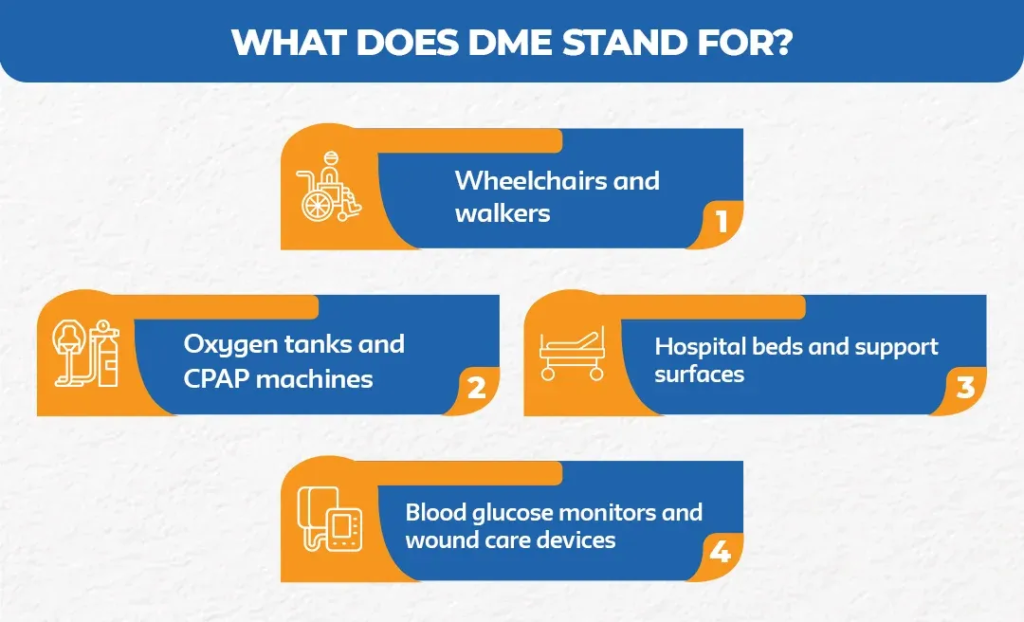
DME stands for Durable Medical Equipment. This includes any medical device or equipment designed for repeated use to assist with medical treatment or daily living. Examples include:
- Wheelchairs and walkers
- Oxygen tanks and CPAP machines
- Hospital beds and support surfaces
- Blood glucose monitors and wound care devices
Why DME Billing Is Important
DME billing is more than just submitting claims—it ensures that healthcare providers receive proper reimbursement while remaining compliant with federal and private insurance rules. Proper billing helps:
- Avoid claim denials and rejections
- Ensure compliance with Medicare billing guidelines
- Reduce administrative burden
- Increase revenue cycle efficiency
Mistakes in DME claims billing can result in delayed payments, lost revenue, or even audits. That’s why many healthcare providers turn to outsourcing DME billing services or use specialized software.
The DME Billing Process
The DME billing process involves multiple steps:
- Patient Eligibility Verification: Confirm insurance coverage and benefits for DME.
- Prescription & Documentation: Ensure a valid physician order is on file to prove medical necessity.
- DME Coding and Billing: Assign accurate HCPCS Level II and CPT codes for equipment and supplies.
- Claim Submission: Submit the claim to Medicare or private insurance electronically.
- Payment Posting & Reconciliation: Track payments, identify underpayments, and reconcile accounts.
- Follow-Up & Appeals: Correct rejected claims and submit appeals if necessary.
DME Billing Codes and Compliance
Accurate coding is the backbone of DME medical billing. Healthcare providers must use correct codes to avoid denials and comply with Medicare and insurance guidelines.
- HCPCS Codes (Level II): For DME items such as wheelchairs, hospital beds, and oxygen supplies.
- CPT Codes: For procedures and professional services associated with DME.
- Modifiers: Indicate specific circumstances of the equipment usage or service.
Maintaining DME billing compliance is critical to prevent penalties, audits, and legal issues.
How to Bill DME Claims to Medicare
Billing DME claims to Medicare requires strict adherence to guidelines:
- Verify patient eligibility and coverage.
- Ensure a valid physician prescription.
- Use accurate HCPCS codes.
- Attach required documentation proving medical necessity.
- Submit claims electronically for faster processing.
- Monitor denials and resubmit if needed.
Errors in coding or documentation can result in delayed or denied payments, which is why some providers prefer DME billing outsourcing or specialized software.
Common DME Billing Errors
Healthcare providers often encounter errors that delay reimbursement, including:
- Incorrect coding or HCPCS selection
- Missing or incomplete documentation
- Duplicate claims submission
- Missed deadlines for claim filing
- Failure to follow insurance-specific billing guidelines
Using DME billing software or hiring a DME billing specialist can drastically reduce errors and improve payment accuracy.
DME Billing Software and Automation
Modern healthcare providers use DME billing software to streamline the billing process:
- Automates claim submissions to Medicare and private insurers
- Tracks claims and payments in real-time
- Reduces human error and ensures coding accuracy
- Provides detailed reporting for audits and compliance
- Integrates with EMR/EHR systems for seamless data flow
Automation not only saves time but also increases revenue cycle efficiency, allowing staff to focus on patient care.
Outsourcing DME Billing
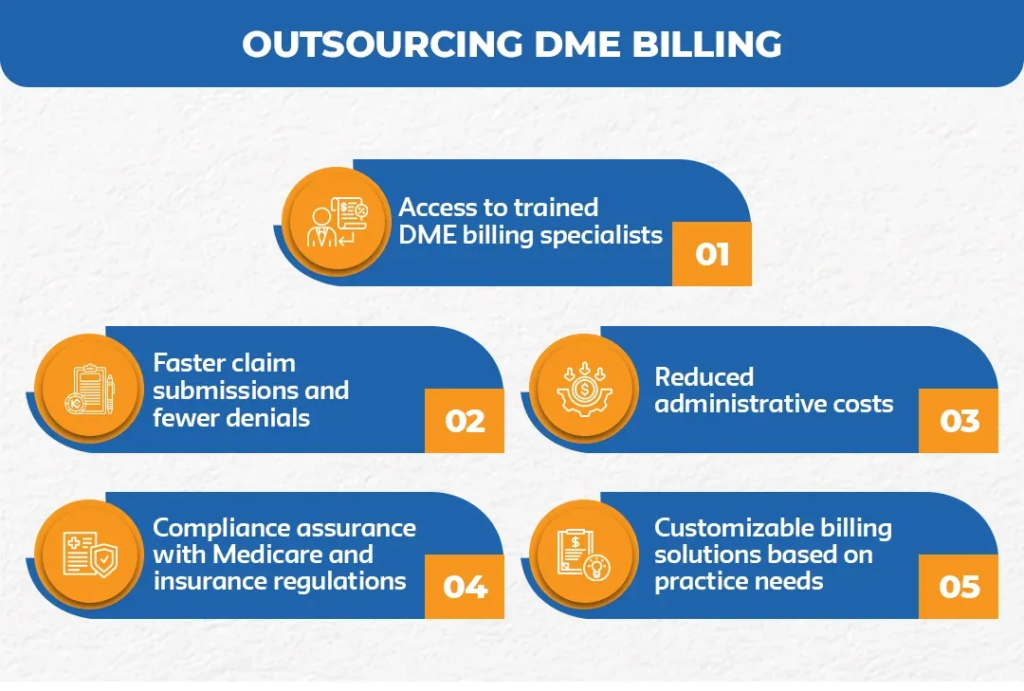
Many healthcare providers choose to outsource DME billing to specialized billing companies. Benefits include:
- Access to trained DME billing specialists
- Faster claim submissions and fewer denials
- Reduced administrative costs
- Compliance assurance with Medicare and insurance regulations
- Customizable billing solutions based on practice needs
Outsourcing is especially helpful for practices with high volumes of DME claims or limited in-house billing resources.
DME Billing Solutions Offered by Verimedix
Verimedix provides comprehensive DME billing solutions, including:
- DME medical billing services for clinics, hospitals, and DME suppliers
- Insurance claim management and Medicare claim submission
- Billing automation and software integration
- DME coding and compliance oversight
- Denial management and appeals
With Verimedix, providers can reduce errors, improve reimbursement rates, and focus on patient care.
FAQs
DME stands for Durable Medical Equipment, including items like wheelchairs, hospital beds, oxygen tanks, and CPAP machines.
Verify eligibility, submit accurate HCPCS codes, attach physician documentation, and follow up on denials.
It can be complex due to coding, compliance, and insurance rules, but software solutions and specialists make it manageable.
Coding mistakes, missing documentation, duplicate claims, and missed deadlines are common.
Yes. Outsourcing ensures accuracy, compliance, and faster reimbursement.
They handle coding, claims submission, compliance, denials, and reporting to optimize revenue.
Automation reduces errors, saves time, improves claim tracking, and increases revenue cycle efficiency.
THE AUTHOR
Shawn Davis is a leading expert in medical administration and revenue optimization. For years, Shawn has been driving outstanding financial outcomes for healthcare providers through Denial Management, Eligibility Verification, Medical Billing and Coding, and Revenue Cycle Management. He is dedicated to helping practices streamline their operations and maximize their reimbursements through precision-driven digital solutions.