
How AI in Healthcare Is Transforming Medical Billing and RCM
Last Updated on: March 09, 2024
Reviewed by Kyle Wilson
- Licensed Agent
- @ verimedix
Artificial Intelligence (AI) is rapidly transforming the healthcare industry, particularly in medical billing and revenue cycle management (RCM). Healthcare providers face increasing administrative workloads, complex billing regulations, and frequent claim denials. AI-powered solutions are helping hospitals, clinics, and billing companies automate processes, reduce errors, and improve financial performance.
From automated medical coding to predictive analytics, AI is streamlining the entire revenue cycle from patient registration to final payment collection. As healthcare organizations adopt AI-driven tools, they are experiencing faster reimbursements, improved operational efficiency, and better financial outcomes.
In this guide, we explore how AI is revolutionizing medical billing and revenue cycle management.
Get Free Quotes
Customized Options Await
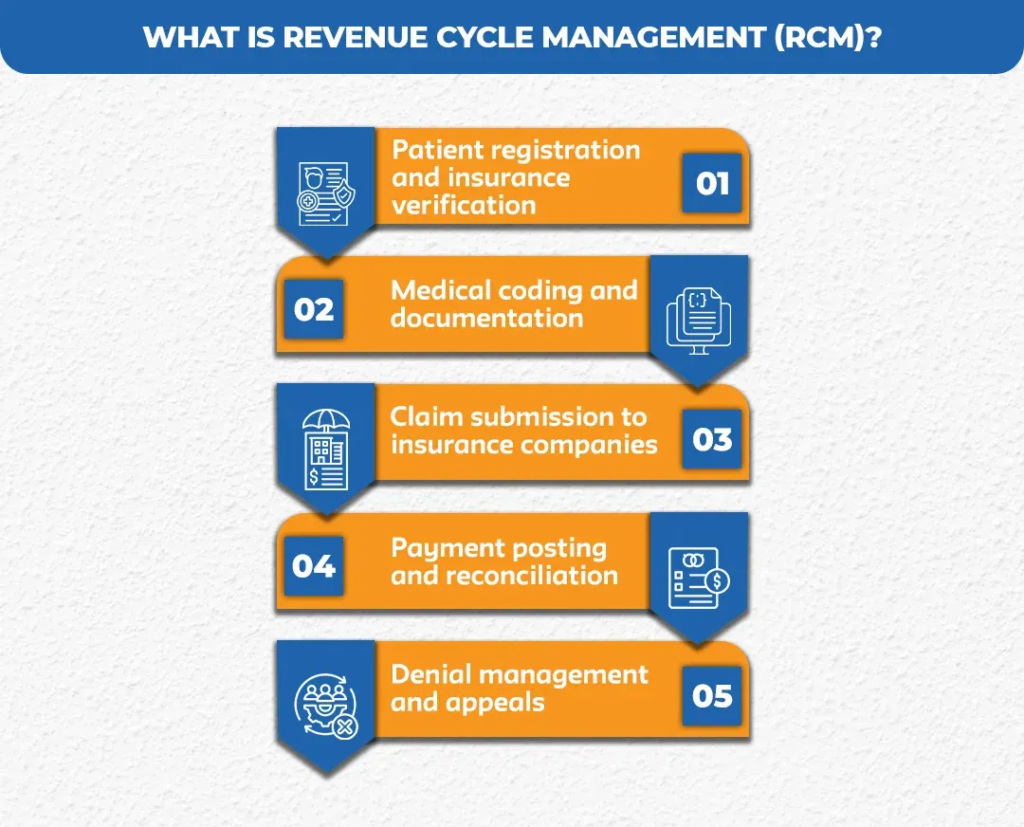
What Is Revenue Cycle Management (RCM)?
Revenue Cycle Management (RCM) refers to the financial process healthcare providers use to track patient care episodes from appointment scheduling to final payment collection.
Typical RCM steps include:
- Patient registration and insurance verification
- Medical coding and documentation
- Claim submission to insurance companies
- Payment posting and reconciliation
- Denial management and appeals
Traditional RCM processes often involve manual data entry, which increases the risk of billing errors and claim rejections. AI is helping automate these tasks and significantly improve efficiency.
How AI Is Improving Medical Billing
AI technology is transforming medical billing by automating repetitive tasks and analyzing large amounts of healthcare data. These systems can process claims faster and more accurately than manual workflows.
1. Automated Medical Coding
Medical coding converts clinical documentation into standardized billing codes such as ICD-10 and CPT. AI-powered coding tools analyze clinical notes and automatically assign the correct codes.
AI-assisted coding systems can achieve over 95% accuracy, reducing human errors and improving claim acceptance rates.
Benefits include:
- Faster coding processes
- Reduced documentation errors
- Improved billing accuracy
2. Reduced Claim Denials
Claim denials are one of the biggest challenges in medical billing. Around 15% of healthcare claims are initially denied due to coding mistakes, missing documentation, or eligibility issues.
AI helps prevent denials by:
- Checking claims before submission
- Verifying insurance eligibility automatically
- Detecting missing information in real time
AI-driven denial management systems can reduce denial rates by 20%–40% depending on implementation.
3. Faster Claims Processing
AI automation speeds up the entire billing workflow by reducing manual tasks such as:
- Data entry
- Claims submission
- Payment tracking
Automation tools help healthcare providers reduce accounts receivable days from 50–60 days to around 30 days, improving cash flow and financial stability.
AI in Revenue Cycle Management
AI impacts every stage of the revenue cycle by providing predictive insights, automation, and real-time analytics.
1. Intelligent Insurance Verification
AI tools can instantly verify insurance coverage and patient eligibility during the scheduling process. This prevents errors that often cause claim denials later in the revenue cycle.
2. Predictive Analytics for Financial Decisions
AI analyzes historical billing data to identify patterns in payer behavior and reimbursement trends. These insights help healthcare organizations:
- Forecast revenue
- Optimize billing strategies
- Identify revenue leakage
AI also converts raw financial data into actionable insights that support better decision-making.
3. Automated Denial Management
Denial management requires significant time and resources in healthcare billing departments. AI can identify high-risk claims before submission and recommend corrections.
Machine learning systems also help generate appeal documentation and track denial trends, reducing the administrative burden on billing teams.
Key Benefits of AI in Medical Billing and RCM
Benefit | Impact |
Higher billing accuracy | Reduces coding errors and claim denials |
Faster reimbursement | Claims processed more quickly |
Reduced administrative workload | Automation replaces manual tasks |
Improved financial insights | Data analytics improves revenue forecasting |
Better compliance | AI helps maintain regulatory compliance |
Healthcare organizations using AI-powered RCM systems report performance improvements of 20% or more across key financial outcomes.
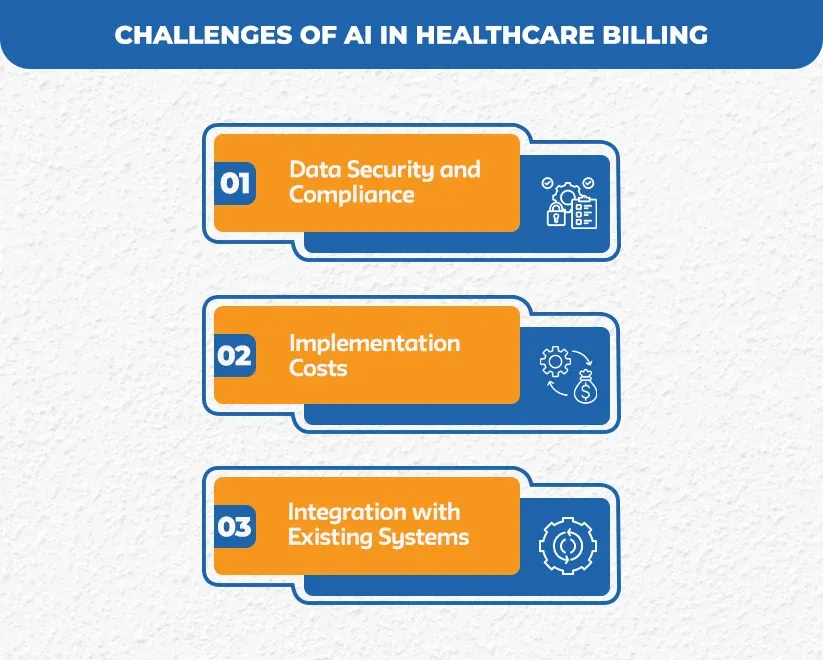
Challenges of AI in Healthcare Billing
Despite its benefits, AI adoption in healthcare also presents challenges.
Data Security and Compliance
Healthcare organizations must ensure AI systems comply with privacy regulations such as HIPAA.
Implementation Costs
AI technology requires investment in software, integration, and staff training.
Integration with Existing Systems
Legacy healthcare systems may not always integrate smoothly with modern AI tools.
However, as AI technology advances, these challenges are becoming easier to manage.
The Future of AI in Healthcare Revenue Cycle Management
The future of healthcare billing will rely heavily on AI, machine learning, and automation technologies.
Future innovations may include:
- Fully automated claims processing
- AI-powered billing assistants
- Predictive revenue management systems
- Real-time payment analytics
As AI tools continue to evolve, healthcare providers will be able to streamline administrative operations while focusing more on patient care.
Conclusion
Artificial Intelligence is revolutionizing medical billing and revenue cycle management by automating complex processes, improving accuracy, and reducing claim denials. AI-powered systems help healthcare organizations process claims faster, enhance financial performance, and minimize administrative workloads.
As healthcare systems continue adopting advanced AI solutions, revenue cycle management will become more efficient, data-driven, and patient-focused. Organizations that embrace AI today will gain a competitive advantage in managing healthcare finances and delivering better services.
Verimedix helps healthcare organizations optimize medical billing and revenue cycle management processes through advanced technology, strategic insights, and industry expertise. Our goal is to support healthcare providers in improving operational efficiency and maximizing revenue performance.
FAQs
AI improves medical billing by automating coding, verifying insurance eligibility, detecting errors before claim submission, and reducing claim denials.
AI in revenue cycle management uses machine learning and automation tools to streamline billing processes, improve claim accuracy, and optimize financial operations in healthcare.
Yes. AI can analyze claim data, detect potential errors, and identify high-risk claims before submission, helping reduce denial rates significantly.
No. AI assists billing professionals by automating repetitive tasks, allowing staff to focus on complex cases and strategic decision-making.
Key benefits include improved billing accuracy, faster reimbursements, lower administrative costs, enhanced compliance, and better financial insights.
THE AUTHOR
Shawn Davis is a leading expert in medical administration and revenue optimization. For years, Shown has been driving outstanding financial outcomes for healthcare providers through Denial Management, Eligibility Verification, Medical Billing and Coding, and Revenue Cycle Management. He is dedicated to helping practices streamline their operations and maximize their reimbursements through precision-driven digital solutions.