

Outsource Medical Billing Services
Last Updated on: January 27, 2026
Reviewed by Kyle Wilson
- Licensed Agent
- @ verimedix

Managing medical billing in-house can be complex, time-consuming, and expensive for healthcare providers. Frequent claim denials, coding errors, and delayed payments often impact revenue and staff productivity. That is why many practices now choose to outsource medical billing services to specialized companies that handle billing more efficiently.
This guide explains how outsourcing medical billing works, its benefits, costs, and how to choose the right outsourcing partner for your practice.
Get Free Quotes
Customized Options Await
What Are Outsource Medical Billing Services?
Definition of Medical Billing Outsourcing
Outsource medical billing services means hiring an external company to manage your coding, claim submission, payment posting, and denial follow-up. These companies specialize in handling payer rules and billing compliance. Their goal is to reduce errors and increase claim acceptance rates. This allows healthcare providers to focus more on patient care.
How Outsourcing Works
Patient data and encounter details are securely shared with the outsourcing company. The billing team codes the services, submits claims, and tracks payments. They also manage appeals and follow-ups on denied claims. Regular reports are provided to keep providers informed.
Who Uses Outsourced Billing
Small clinics, private practices, and large hospitals all use outsourced billing services. It is especially helpful for practices with limited billing staff. Providers with high claim volumes also benefit from professional support. Outsourcing adapts to different practice sizes.
Difference Between In-House and Outsourced Billing
In-house billing requires hiring, training, and managing staff internally. Outsourcing transfers this responsibility to specialists. This reduces administrative burden and improves efficiency. Many practices find outsourcing more cost-effective.
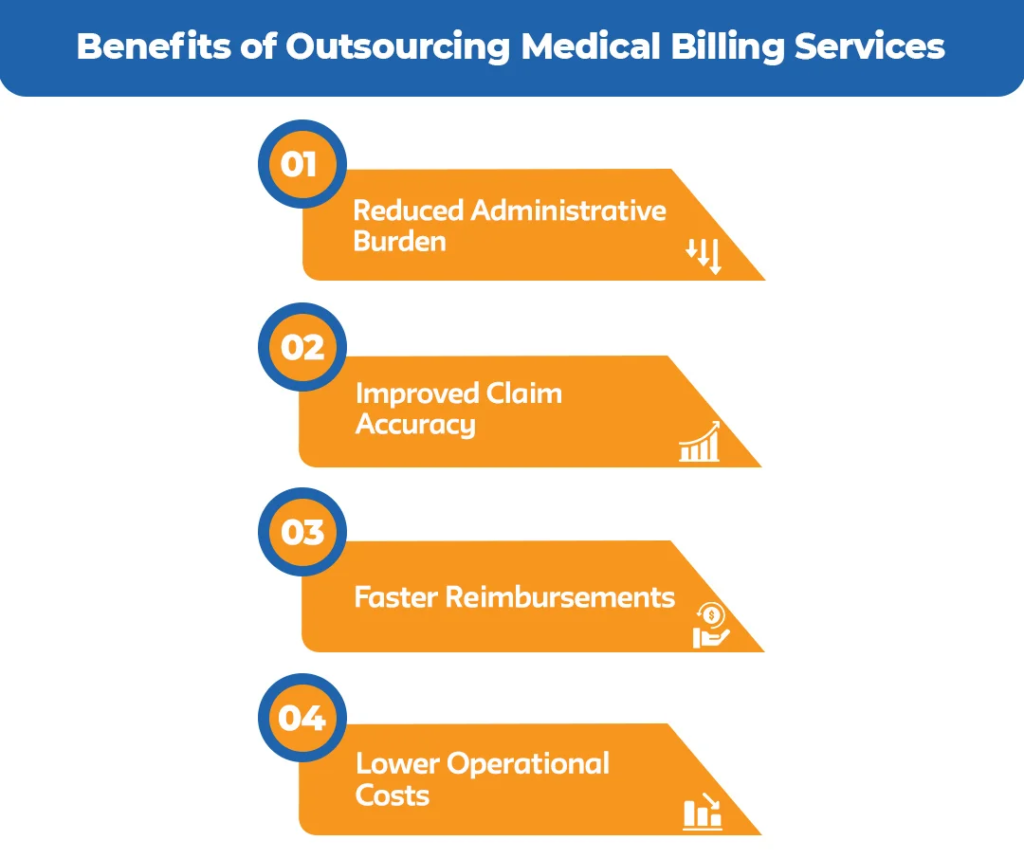
Benefits of Outsourcing Medical Billing Services
Reduced Administrative Burden
Outsourcing removes the daily workload of billing from your staff. This allows your team to focus on patient services. It reduces stress and operational pressure. Office efficiency improves significantly.
Improved Claim Accuracy
Professional billing companies use certified coders and updated coding systems. This reduces coding errors and incomplete claims. Higher accuracy leads to fewer rejections. Revenue collection becomes more reliable.
Faster Reimbursements
Outsourced teams submit claims quickly and follow up regularly. This shortens payment cycles. Cash flow improves steadily. Delays caused by internal backlogs are minimized.
Lower Operational Costs
Hiring full-time billing staff is expensive. Outsourcing reduces payroll, training, and software costs. Practices pay only for services used. This helps control long-term expenses.
How Much Does It Cost to Outsource Medical Billing?
Percentage-Based Pricing
Most billing companies charge a percentage of monthly collections. This usually ranges from 4% to 9%. Higher collections mean higher fees. It aligns the billing company’s success with yours.
Flat Fee Models
Some providers offer fixed monthly pricing. This works well for practices with stable claim volumes. It provides predictable billing expenses. Budget planning becomes easier.
Setup and Transition Costs
Initial setup may include data migration and system integration. These are usually one-time costs. Proper onboarding ensures smooth operations. Long-term benefits outweigh startup expenses.
Hidden Costs to Watch
Some contracts include extra charges for denials or reporting. Always review agreements carefully. Transparency is important. Choose providers with clear pricing.
Best Medical Billing Outsourcing Services
Experience in Your Specialty
Choose a company familiar with your medical specialty. Specialty knowledge reduces coding mistakes. It improves claim acceptance rates. Expertise leads to better results.
Technology and Software
Modern billing companies use advanced billing software. Automation improves speed and accuracy. Secure systems protect patient data. Technology enhances performance.
Compliance and Security
HIPAA compliance is essential for patient privacy. Strong data protection reduces legal risks. Certified processes improve trust. Security must be a top priority.
Customer Support Quality
Reliable support ensures quick issue resolution. Dedicated account managers improve communication. Regular reporting builds transparency. Strong support improves partnerships.
Outsource Medical Billing and Coding Services
Combined Coding and Billing
Some companies handle both coding and billing together. This improves coordination between teams. Errors are reduced. Workflow becomes more efficient.
Certified Coders
Certified coders understand payer rules and ICD updates. They ensure accurate code selection. This reduces denials. Quality coding improves reimbursement.
Continuous Training
Outsourcing firms train staff regularly on coding changes. This keeps billing updated. Compliance improves. Risk of audits decreases.
Better Documentation Support
Billing teams guide providers on proper documentation. Clear records reduce claim issues. Medical records improve. Denial rates decline.
Is Outsourcing Medical Billing a Good Idea?
For Small Practices
Small clinics benefit from lower staffing costs. Outsourcing reduces management burden. It improves cash flow stability. Growth becomes easier.
For Large Practices
High-volume practices need scalable billing systems. Outsourcing handles large workloads efficiently. Performance remains consistent. Internal pressure is reduced.
Financial Impact
Most practices see improved collections after outsourcing. Denial rates drop. Revenue increases. Financial planning becomes more predictable.
Operational Improvement
Workflow becomes smoother with fewer disruptions. Staff productivity improves. Patient services improve. Overall operations strengthen.
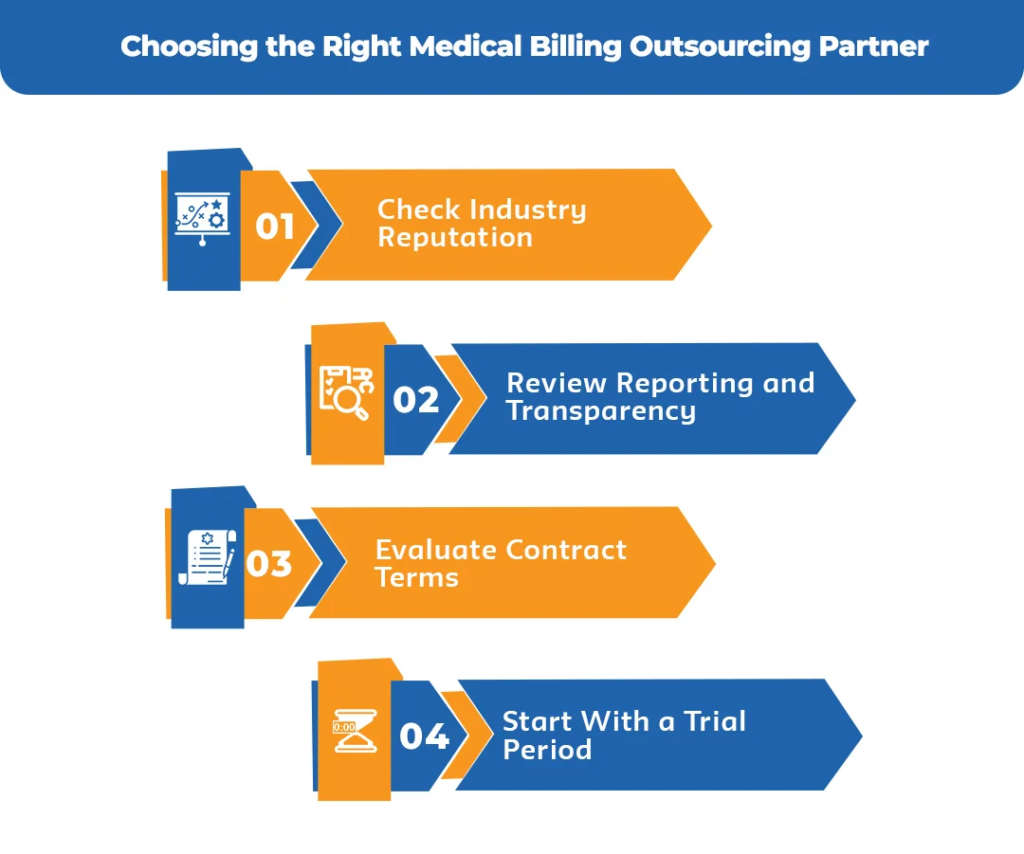
Choosing the Right Medical Billing Outsourcing Partner
Check Industry Reputation
Look for reviews and client references. Reputation reflects service quality. Trusted providers reduce risk. Experience matters.
Review Reporting and Transparency
Good companies provide detailed performance reports. Transparency builds trust. It helps track revenue. Decision-making improves.
Evaluate Contract Terms
Avoid long-term rigid contracts. Flexibility is important. Exit clauses protect your practice. Always read agreements carefully.
Start With a Trial Period
Some companies offer trial services. This allows performance evaluation. Risk is reduced. Confidence builds before long-term commitment.
Conclusion
Outsource medical billing services offer healthcare providers a powerful way to reduce administrative burden, improve claim accuracy, and increase revenue. With professional billing support, practices can focus more on patient care while maintaining strong financial performance.
Choosing the right outsourcing partner ensures faster reimbursements, fewer denials, and long-term operational stability. For practices seeking efficiency and growth, partnering with Verimedix provides expert medical billing solutions that help streamline operations and maximize revenue with confidence.
FAQs
Is outsourcing medical billing a good idea?
Yes, outsourcing improves efficiency, reduces errors, and increases revenue for most practices.
How much does it cost to outsource medical billing?
Costs usually range from 4% to 9% of monthly collections depending on services.
What is outsourcing in medical billing?
It means hiring an external company to manage coding, claims, and collections.
What is the golden rule in medical billing?
Accurate documentation and correct coding are essential for successful billing.
THE AUTHOR
Shawn Davis is a leading expert in medical administration and revenue optimization. For years, Shown has been driving outstanding financial outcomes for healthcare providers through Denial Management, Eligibility Verification, Medical Billing and Coding, and Revenue Cycle Management. He is dedicated to helping practices streamline their operations and maximize their reimbursements through precision-driven digital solutions.