

HCPCS Level I & Level II Codes: Complete Guide for Medical Billing Professionals
Last Updated on: March 31, 2026
Reviewed by Kyle Wilson
- Licensed Agent
- @ verimedix
Medical billing relies heavily on standardized coding systems to ensure healthcare providers receive accurate reimbursement. One of the most essential coding systems used across healthcare organizations is HCPCS.
Understanding HCPCS Level I & Level II codes is critical for medical billers, coders, healthcare providers, and revenue cycle managers. These codes help insurance companies identify procedures, supplies, medications, and services provided to patients.
In this comprehensive guide, we’ll explain what HCPCS stands for, the difference between HCPCS Level I and Level II, how they relate to CPT codes, and how healthcare providers can use them correctly for billing success.
What Does HCPCS Stand For?
What Does HCPCS Stand For?
HCPCS stands for Healthcare Common Procedure Coding System.
It is a standardized coding system used primarily for:
- Medicare billing
- Medicaid claims
- Private insurance reimbursement
- Medical services documentation
HCPCS codes allow healthcare providers to communicate services clearly and consistently to payers.
What Is HCPCS?
HCPCS is divided into two main levels:
- HCPCS Level I Codes
- HCPCS Level II Codes
Each level serves a specific purpose in medical billing and reimbursement.
What Is HCPCS Level I?
HCPCS Level I codes are identical to CPT (Current Procedural Terminology) codes.
These codes describe medical procedures and professional services performed by healthcare providers.
Examples of HCPCS Level I Services:
- Office visits
- Surgical procedures
- Diagnostic testing
- Physician evaluations
- Preventive services
Level I codes consist of five numeric digits (example: 99203).
Common Uses of HCPCS Level I Codes
Healthcare providers use Level I codes for:
- Physician services
- Outpatient procedures
- Medical consultations
- Diagnostic services
Because these codes represent professional services, they are heavily used in physician billing.
What Is HCPCS Level II?
HCPCS Level II codes are used to identify non-physician services, medical supplies, equipment, and medications.
Unlike Level I, these codes describe items not included in CPT coding.
HCPCS Level II Code Structure
- Begin with a letter followed by four numbers
- Example: E0114 (Crutches)
Examples of HCPCS Level II Codes
Level II codes cover:
- Durable medical equipment (DME)
- Prosthetics and orthotics
- Ambulance services
- Injectable medications
- Medical supplies
Examples include:
- A Codes – Medical supplies
- E Codes – Durable medical equipment
- J Codes – Injectable drugs
L Codes – Orthotics and prosthetics
What Is an HCPCS Level II Code?
An HCPCS Level II code identifies items or services not performed directly by physicians but essential to patient care.
These include:
- Wheelchairs
- Oxygen equipment
- Catheters
- Infusion drugs
- Surgical supplies
Level II codes are especially important for Medicare and DME billing.

HCPCS Codes List Overview
The HCPCS codes list is organized alphabetically based on service categories:
Code Range | Description |
A Codes | Transportation & Medical Supplies |
B Codes | Enteral & Parenteral Therapy |
E Codes | Durable Medical Equipment |
J Codes | Drugs Administered Other Than Ora |
L Codes | Prosthetics & Orthotics |
Q Codes | Temporary Codes |
S Codes | Commercial Insurance Codes |
Healthcare billers frequently perform HCPCS code lookup to identify correct reimbursement categories.
HCPCS Code Lookup: Why It Matters
Performing an accurate HCPCS code lookup ensures:
- Correct billing submission
- Compliance with Medicare rules
- Accurate reimbursement
- Reduced claim denials
Medical billing teams must verify codes regularly because HCPCS updates occur annually.
HCPCS Level I vs Level II Codes
Understanding the difference between Level I and Level II is fundamental.
Feature | HCPCS Level I | HCPCS Level II |
Based On | CPT Codes | CMS System |
Code Format | 5 Numbers | Letter + 4 Numbers |
Used For | Physician services | Supplies & equipment |
Maintained By | AMA | CMS |
Examples | Office visits | Wheelchairs, drugs |
Simply put:
- Level I = Services
- Level II = Supplies & Equipment
Relationship Between HCPCS and CPT Codes
Many people ask how HCPCS relates to CPT coding.
Key Relationship:
- CPT codes = HCPCS Level I
- HCPCS expands CPT by including supplies and equipment
Together, CPT and HCPCS create a complete billing system covering all healthcare services.
What Are Category I, II, and III CPT Codes?
CPT codes are categorized into three groups:
Category I CPT Codes
These describe established medical procedures.
Examples:
- Surgery
- Evaluation & Management
- Radiology services
Category II CPT Codes
Used for performance measurement and quality tracking.
Examples:
- Patient safety measures
- Preventive care reporting
They are optional and usually not reimbursed.
Category III CPT Codes
Temporary codes used for emerging technologies and experimental procedures.
These allow tracking before procedures become standard practice.
What’s the Difference Between CPT I and CPT II?
Feature | CPT Category I | CPT Category II |
Purpose | Billable procedures | Quality reporting |
Reimbursement | Yes | Usually No |
Usage | Daily clinical services | Performance tracking |
Category I codes directly affect provider revenue, while Category II codes support healthcare quality improvement.
Importance of HCPCS Codes in Medical Billing
HCPCS coding plays a major role in revenue cycle management.
Benefits Include:
- Standardized communication with insurers
- Accurate reimbursement calculation
- Medicare compliance
- Reduced billing errors
Without HCPCS codes, providers could not bill for many essential services and medical supplies.
HCPCS Codes in Medicare Billing
HCPCS Level II codes are especially important for Medicare.
Medicare uses these codes to determine:
- Coverage eligibility
- Fee schedules
- Payment amounts
- Medical necessity requirements
Incorrect HCPCS coding can result in claim denials or audits.
Get Free Quotes
Customized Options Await
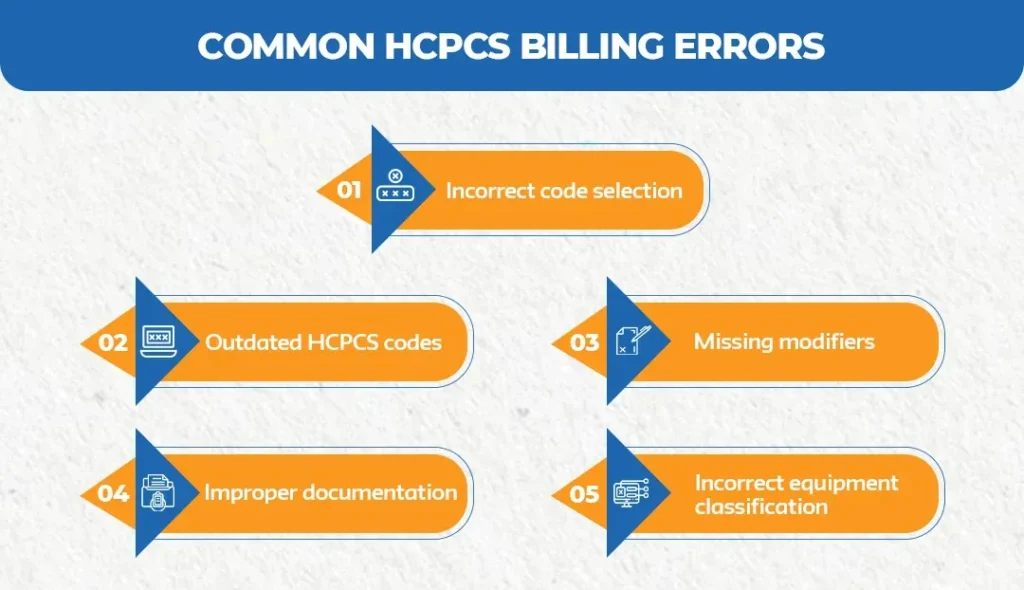
Common HCPCS Billing Errors
Medical practices often face issues due to:
- Incorrect code selection
- Outdated HCPCS codes
- Missing modifiers
- Improper documentation
- Incorrect equipment classification
Regular training and audits help avoid these mistakes.
Best Practices for Using HCPCS Codes
Healthcare organizations should follow these guidelines:
✔ Perform regular HCPCS code lookup
✔ Stay updated with CMS annual revisions
✔ Verify payer-specific requirements
✔ Use billing automation tools
✔ Maintain detailed documentation
Proper coding improves reimbursement speed and reduces administrative burden.
HCPCS Codes and Revenue Cycle Management
Accurate HCPCS coding directly impacts financial performance.
Correct coding helps providers:
- Increase revenue
- Prevent denials
- Improve claim acceptance rates
- Maintain regulatory compliance
This is why many practices outsource billing services to experienced medical billing companies.
How Verimedix Simplifies HCPCS Billing
Managing HCPCS Level I & Level II codes can be challenging without expert support.
Verimedix provides advanced medical billing solutions designed to optimize coding accuracy and reimbursement.
Verimedix Services Include:
- HCPCS and CPT coding expertise
- Claim submission and follow-up
- Denial management
- Compliance monitoring
- Revenue cycle optimization
With Verimedix, healthcare providers reduce administrative stress and focus on delivering quality patient care.
Optimize Your Medical Billing with Verimedix
Struggling with HCPCS coding, claim denials, or complex billing workflows?
Let Verimedix handle your coding and billing processes with industry-leading expertise.
With Verimedix, you can:
1.Improve coding accuracy
2.Reduce billing errors
3.Accelerate reimbursements
4.Ensure Medicare compliance
Contact Verimedix today and transform your revenue cycle management.
FAQs
HCPCS Level I includes CPT codes used for physician services, while Level II covers medical supplies, equipment, and non-physician services.
It is an alphanumeric code used to bill for durable medical equipment, drugs, prosthetics, and medical supplies.
Category I describes procedures, Category II tracks performance measures, and Category III represents emerging technologies.
CPT I codes are billable procedures, while CPT II codes are mainly used for quality reporting.
It ensures accurate reimbursement, billing compliance, and standardized healthcare documentation.
THE AUTHOR
Shawn Davis is a leading expert in medical administration and revenue optimization. For years, Shawn has been driving outstanding financial outcomes for healthcare providers through Denial Management, Eligibility Verification, Medical Billing and Coding, and Revenue Cycle Management. He is dedicated to helping practices streamline their operations and maximize their reimbursements through precision-driven digital solutions.